Garden design Penrith
Landscaping Penrith takes garden design and planting across the Penrith area, from one new bed to a whole front yard, with drip irrigation where it's needed. A local landscaper we work with visits, looks at the sun, the soil and where water sits after rain, then agrees the layout, a clear price and what's included before any work starts.
What sets the price of a garden design
The landscaper prices garden design and planting at the site visit, from what they see in the yard:
- The size of the area, and how many beds
- The number and size of the plants, from small pots to a young tree
- How the clay is prepared: broken up and improved, or beds built up with garden soil
- Edging, mulch and any paths
- Drip irrigation, and how far the beds are from a tap
- How easy it is to bring soil and mulch into the yard
- Whether your estate needs a drawn landscape plan
A plan before planting
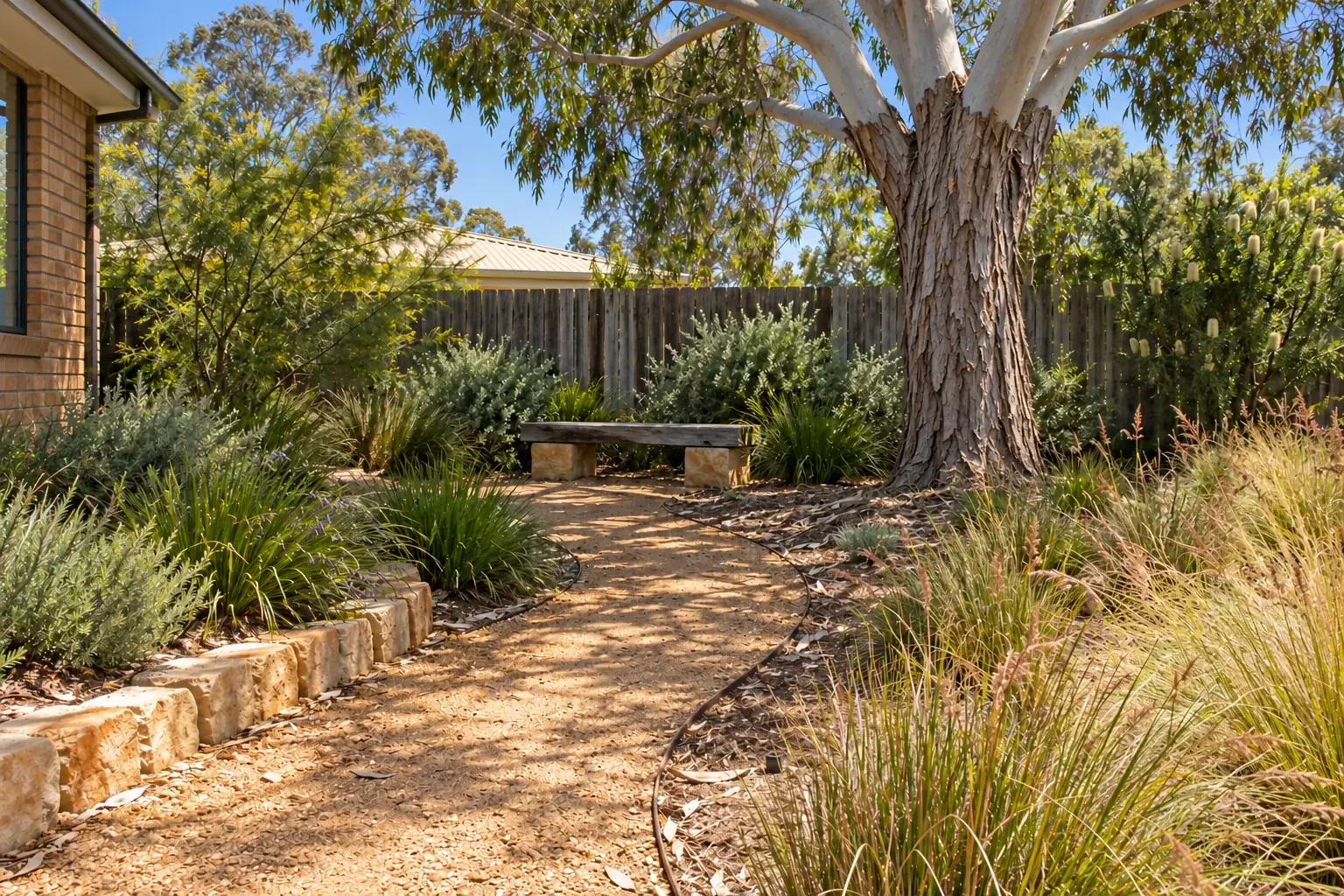
Garden or landscape design on a Penrith block starts with the yard, not a plant list. At the site visit the landscaper looks at where the sun falls through the day, where water sits after rain, the soil, what needs screening and how you use the yard. Then they set out the beds, plants, paths and watering with you.
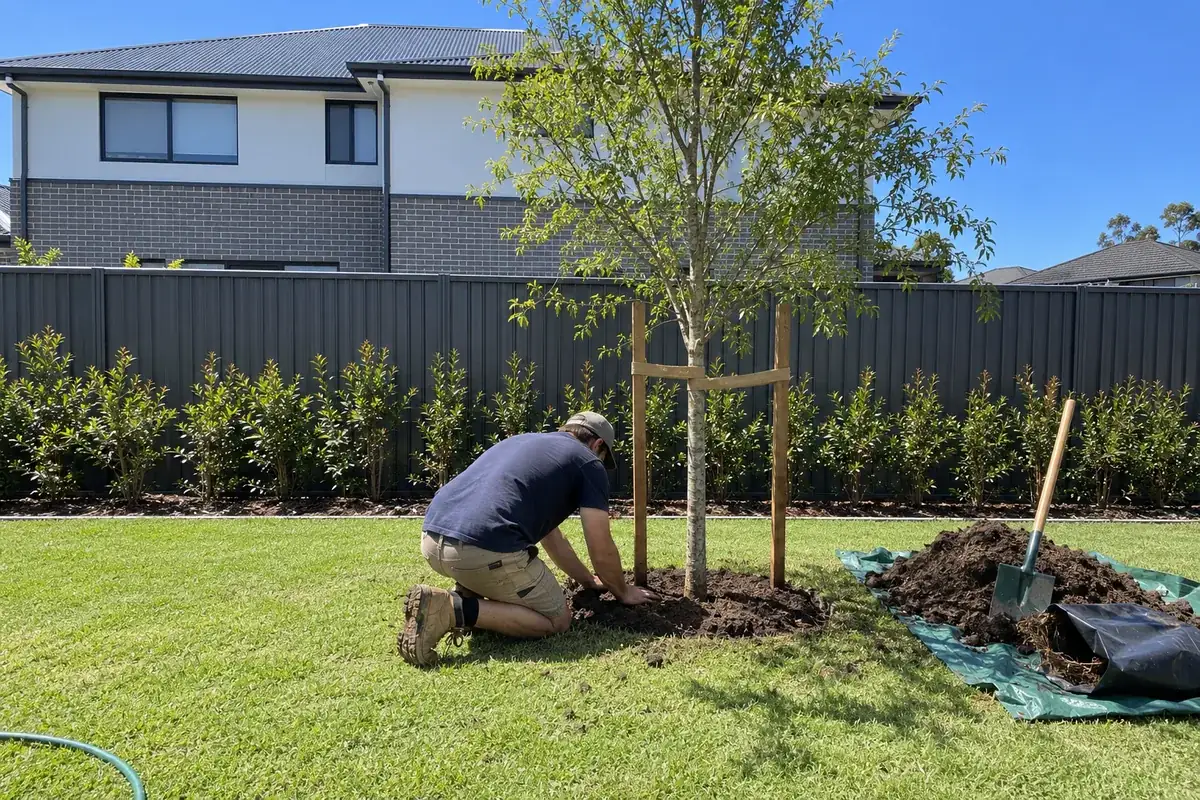
Shade comes first. Around noon on 10 January 2020, Western Sydney University measured a "feels like" temperature nearly 20 °C lower under the trees at Tench Reserve than in an open Penrith car park nearby. A tree on the side of the yard that gets the afternoon sun does the most work: a small tree such as a crepe myrtle on an estate block, or a grey box or forest red gum, the big trees of the Cumberland Plain, on acreage. For shade over a patio, see Pergolas and decks.
Much of Penrith sits on clay that drains slowly and can stay waterlogged after rain. A plant set into a hole dug in the clay can end up sitting in water, so new beds are often built up with garden soil, or the clay is broken up and improved before anything goes in.
Older suburbs
Kingswood and Emu PlainsA garden redo starts with what stays, such as a good tree, a hedge or an old path. The rest comes out and the beds are reshaped around the lawn.
New estates
Jordan Springs and CaddensThe builder often leaves compacted clay, rubble and little topsoil, so the ground is prepared before anything is planted. Check the estate guidelines first (see below).
The foothills
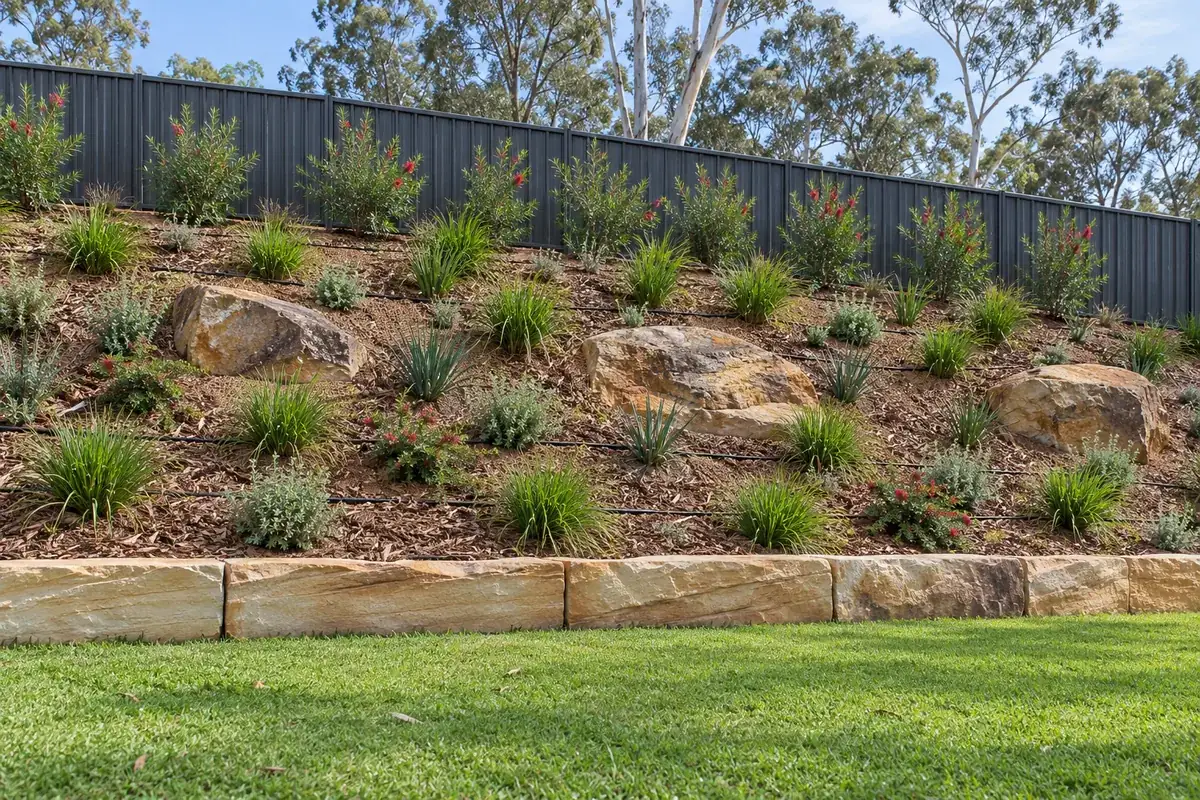
Leonay and Emu HeightsPlants on a slope help hold the soil. Where a bank is too steep to plant, it becomes a retaining wall job, with terraced beds.
Acreage
Mulgoa and Orchard HillsScreening and windbreak planting along the boundary and around the house, with water planned in from the start.
Plants for Penrith heat and clay
Hot, open beds suit tough natives such as lomandra, dianella, kangaroo grass and hardenbergia, with hardy garden plants such as westringia, grevillea and bottlebrush. Lilly pilly, gardenia and liriope need better soil and regular water, so they go where the drip line reaches.
Winter matters too. Penrith Lakes has dropped to −1.8 °C, so frost-tender plants such as frangipani need a sheltered spot.
Plants go into prepared soil and are mulched straight after, which keeps the soil cooler and holds water through the first summer.
Drip irrigation
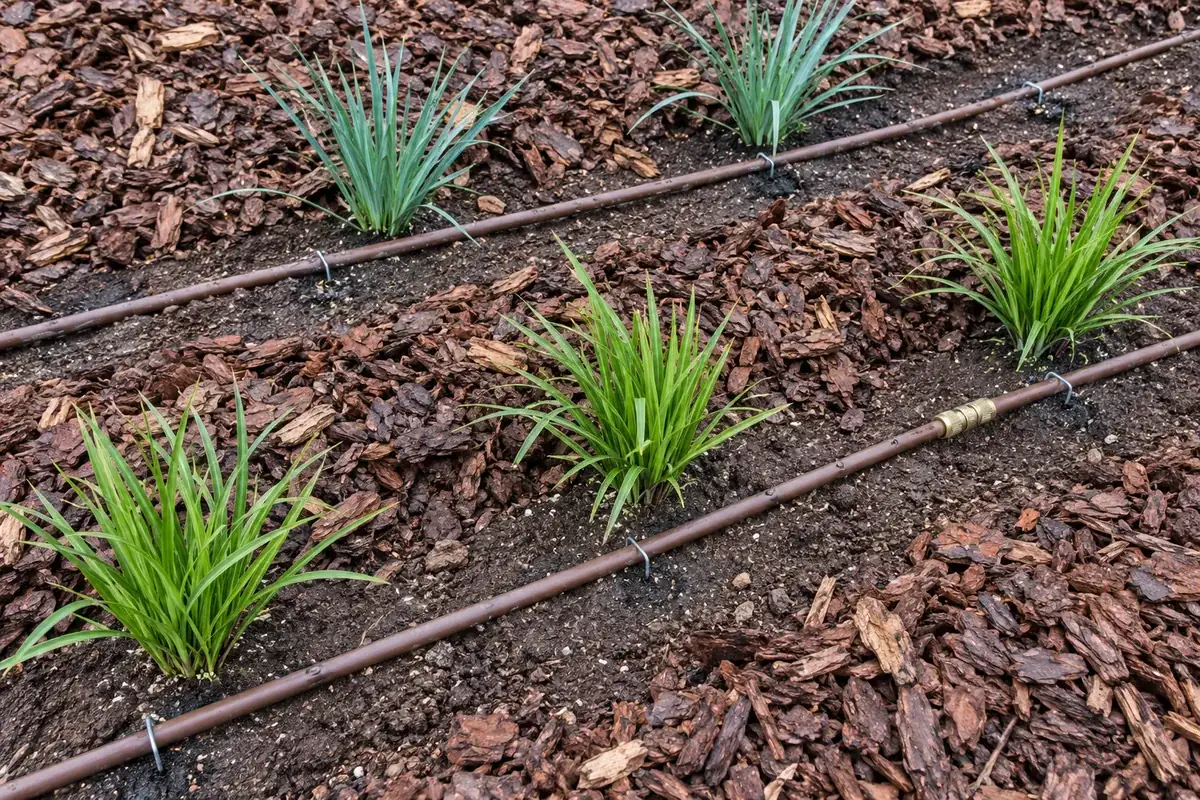
A drip line runs under the mulch and waters each plant at its roots, so less water is lost to sun and wind and the leaves stay dry. On a timer set to run before 10 am or after 4 pm, it keeps to the watering hours in Sydney Water's Water Wise Guidelines without anyone holding a hose. On clay, the landscaper sets the drip line and timer so the water soaks in rather than running off.
Front yard landscaping and estate rules
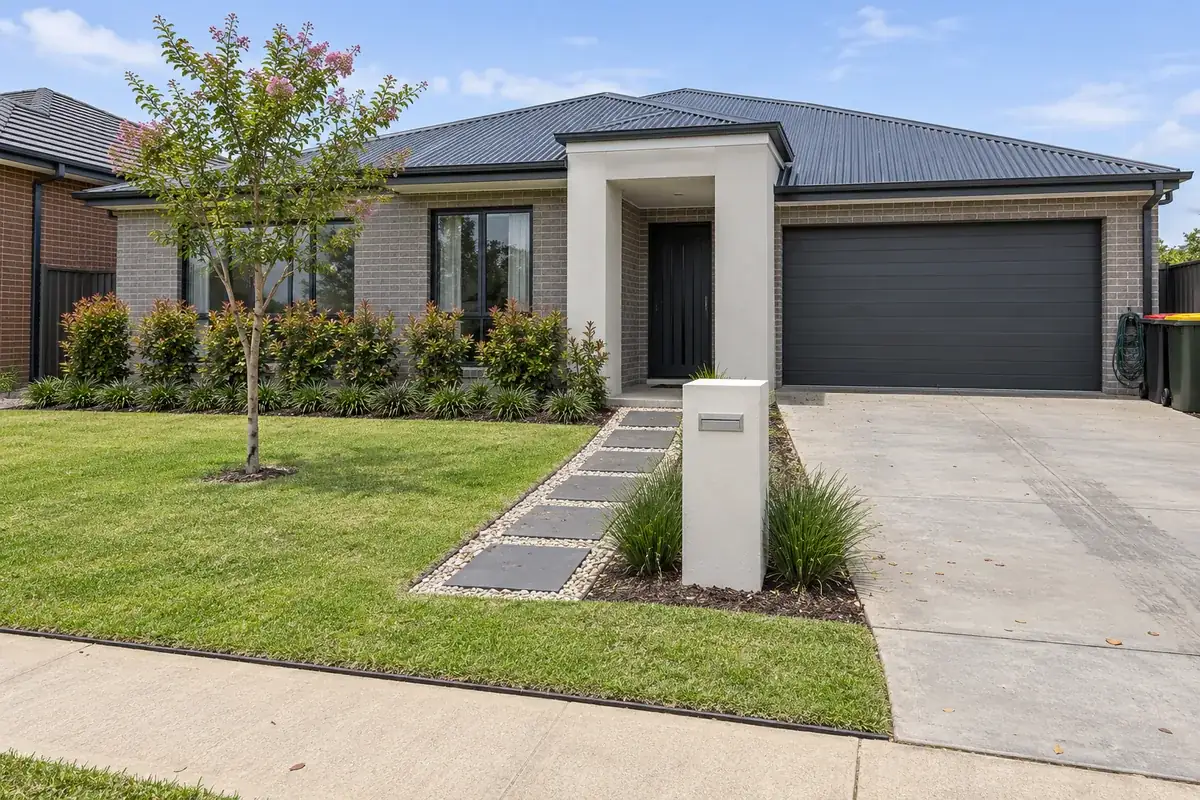
In the estates, front yard landscaping often comes first, because the guidelines cover what can be seen from the street. Check your estate's guide before you plan. Jordan Springs' Eastern Precinct guide, for example, asks for a landscape plan by a qualified designer, a tree of 4 to 8 m mature height in both the front and back yards, a minimum share of native or water-wise planting, and no artificial turf where it can be seen from the street. Other estates have their own guides.
Outside the estates, many owners ask for a low-maintenance front yard: less lawn to mow, a bed of tough natives along the fence and a path to the door (see Paving). For the lawn itself, see Turf.
New-home yards: the order of work
On a new block, the order matters, because each stage digs through the one before. The usual order:
- Levels, walls and drainagego in first, while the yard is open for a machine: retaining walls, ag pipes and pits.
- Fences and gatesnext, so the boundaries are set.
- Paths, patios and the driveway edgeafter that: paving.
- Turf and garden bedsonce the hard work is done: turf.
- Planting and mulchlast, so new plants aren't trampled.
A big job can be done in stages in this order, front yard first if the estate asks for it.
Gardens near bushland and grassland
Penrith's bushfire prone land map was updated in December 2024 and now takes in grassland as well as bush, so more blocks on the acreage and the foothills are mapped. Around the house, the NSW Rural Fire Service asks for short lawns and well-kept gardens, trees and shrubs trimmed back from the roof, and fallen leaves and twigs cleared away. The landscaper plans the planting near the house with that in mind and checks your block at the site visit.
What happens after you ask
- Send your suburb, the area (front, back or both) and what you have in mind: a few new beds, a native garden, a screen or drip irrigation. A photo helps. You hear back within 48 hours.
- A local landscaper calls to book a visit. On site they look at the sun and shade, the soil, where water sits after rain, the trees already there, the access and any estate guidelines.
- You get a clear price and what's included, agreed before any work starts, and a time frame once they've seen the job.
Questions people ask
How much does garden design cost in Penrith?
As a rough guide, about $57 to $205 a square metre for a new garden bed with soil preparation, edging, plants and mulch, and about $920 to $5,750 for a garden plan (What's The Damage?, Sydney, October 2026). These are published guide figures, not a quote for your job. The size of the area, the number and size of plants, how the clay is prepared, edging, mulch and drip irrigation set your price, and the landscaper agrees it with you at the site visit, before any work starts.
What plants grow well in Penrith?
Tough natives and hardy plants that cope with heat and clay: lomandra, dianella, westringia, grevillea and bottlebrush in sunny beds, and a shade tree sized to the block. The landscaper matches plants to your sun, soil and drainage at the site visit.
Can you do the landscape plan for the estate?
Ask when you enquire. Some estate guides ask for one, Jordan Springs' Eastern Precinct guide among them, so check your estate's guide first.
Can we do the front yard first?
Yes. A front yard can be planned and planted on its own, often to meet the estate's guidelines, with the back yard done later. Planning both at the start keeps the paths, beds and watering lined up.
Do I need a permit to remove or prune a tree in Penrith?
Usually, if the tree is 3.5 m or taller. The landscaper checks yours at the site visit.
Quick check: do I need a permit for my tree?
Answer the questions for a quick guide.
Some species and dead trees are exempt too. The landscaper checks yours at the site visit. A guide only, not legal advice.
Does a landscaper need a licence for planting?
Not for planting alone. In NSW, a contractor licence is needed for structural landscaping such as retaining walls, paving, pergolas and decks worth more than $5,000 in labour and materials, including GST; turf and planting aren't on the list. You can check a licence online or in the Service NSW app.
How long does a new garden take?
The landscaper gives you a time frame after the site visit, once they've seen the yard and agreed the plants with you.